
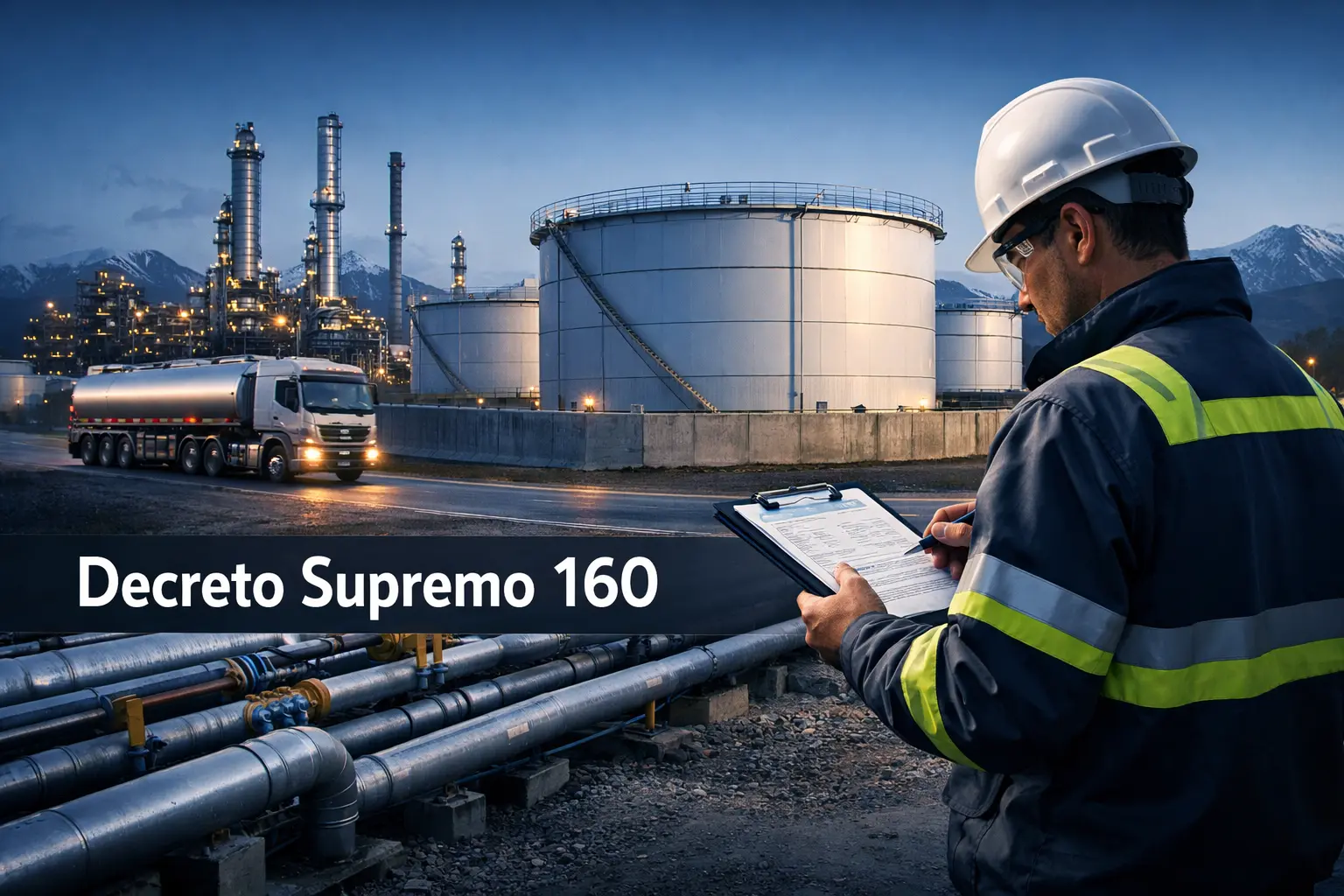
What Is Decreto Supremo 160 and Why Does It Exist?
If you work in Chile’s fuel industry or manage any installation that handles liquid fuels, you have certainly heard of decreto supremo 160. It is one of the most important safety regulations ever introduced in Chile’s entire energy sector. The regulation was issued by Chile’s Ministry of Economy, Development and Tourism and officially published on July 7, 2009. It replaced older and outdated rules that no longer reflected modern safety standards or the growing complexity of the entire fuel industry across the country. Understanding this regulation fully can protect your operations, your workers, and the communities that live and work around your facilities every single day throughout the entire year.
Before this regulation came into effect, safety standards across different fuel facilities in Chile were inconsistent and difficult to enforce. Some operations followed strong internal safety protocols while others followed very little formal guidance at all. This inconsistency created dangerous gaps in safety management that put workers, surrounding communities, and the broader environment at serious and unnecessary risk year after year. The Chilean government responded by creating decreto supremo 160 as a unified framework that every operator in the fuel industry must follow without exception, bringing genuine clarity and accountability to a sector where mistakes can have severe and long-lasting consequences.
The timing of its introduction also reflected broader changes happening in Chile’s energy market at that time. The country was increasing its use of biofuels and needed updated rules that addressed these newer fuel types alongside traditional petroleum-based products like gasoline and diesel. The decree filled that important gap by defining clear and enforceable safety standards for biofuels such as ethanol and biodiesel, making it a forward-looking regulation that has remained highly relevant through every update and amendment introduced since its original publication more than fifteen years ago.
The Full Scope of What Decreto Supremo 160 Covers
One of the most important things to understand about decreto supremo 160 is how broadly it applies across Chile’s entire energy sector. This is not a regulation that targets just one part of the fuel supply chain or one specific type of facility. It reaches across every stage of fuel operations, from large industrial refineries processing millions of liters per day to small storage units maintained at private workshops and rural agricultural properties. No significant part of the liquid fuel industry falls entirely outside its reach, which is what makes it such a powerful and comprehensive safety framework for everyone working in the sector.
The regulation covers production and refining facilities, meaning that any plant that processes crude oil or produces refined petroleum products must meet strict engineering and operational safety standards from day one. These standards address the design of equipment, the materials used in construction, and the daily procedures that workers must follow during both normal operations and emergencies. Storage plants and fuel depots also fall under its requirements, and they must comply with specific tank design standards, separation distance requirements, leak detection systems, and fire suppression measures that protect both workers and nearby communities from the serious risks that large volumes of flammable fuel always carry.
Transport operations, including road tanker trucks, underground pipelines, and ship-to-shore maritime transfers, all receive detailed safety requirements under decreto supremo 160. Service stations and fuel distribution terminals receive particularly close attention because they interact directly with the general public every single day, making full compliance especially important for community safety across Chile. Even agricultural fuel storage on farms and fuel use within industrial workshops falls within the scope of the decree, making it one of the most comprehensive and far-reaching fuel safety regulations found anywhere in the Latin American region today.
How Decreto Supremo 160 Classifies Liquid Fuels
Not all fuels carry the same level of risk, and decreto supremo 160 carefully recognizes this reality by classifying liquid fuels according to their specific physical properties and potential hazards. Understanding how the regulation classifies different fuel types is essential for any operator, because misclassification can lead directly to serious accidents and significant legal consequences. The classification system forms the foundation on which all other safety requirements are built, and getting it right is the first and most important practical step any operator can take toward achieving genuine compliance with the regulation.
The decree defines liquid fuels as hydrocarbon mixtures that remain in a liquid state at 37.8 degrees Celsius and at a working pressure of 275 kilopascals. Common fuels like gasoline, diesel, and kerosene clearly meet this technical definition and are fully subject to all applicable requirements throughout the regulation. The decree also extends to biofuels produced from organic sources, including ethanol made from sugarcane or corn, and biodiesel produced from vegetable oils or animal fats. Biofuels can cause corrosion in certain metals and can degrade specific seals and rubber components, so operators must verify full material compatibility before handling these substances in any existing fuel infrastructure.
Some fuels with very low boiling points or unusually high volatility receive special designations under decreto supremo 160 and require additional protective measures beyond the standard requirements. These substances may need inert gas blanketing systems that displace oxygen above the liquid surface to prevent vapor ignition, or refrigeration systems that maintain controlled low temperatures to reduce dangerous vapor pressure buildup. These extra requirements reflect the regulation’s risk-based approach to fuel safety, ensuring that the level of protection applied to any operation always accurately matches the actual physical danger that the substance being handled presents to workers, equipment, and the surrounding environment.
Core Safety Requirements Under Decreto Supremo 160
The technical requirements at the heart of decreto supremo 160 form the foundation of Chile’s national fuel safety system and are drawn from decades of accumulated safety knowledge within the global petroleum industry. These are not voluntary guidelines or suggestions that operators can follow when convenient. They are mandatory standards that every covered installation must fully meet at all times, touching on every aspect of how fuel facilities are designed, built, operated, and maintained over their entire working life. The regulation expects every operator to treat these requirements as absolute minimums, not as targets that can be partially achieved based on available budgets.
Every owner or operator of a covered fuel installation is personally and legally responsible for ensuring full and continuous compliance with all applicable provisions of decreto supremo 160. The regulation requires every covered operator to establish and maintain a formal Safety Program known in Spanish as a Programa de Seguridad. This program must identify all potential risks associated with the facility’s specific operations, describe in detail the preventive measures in place to address each identified risk, and include a comprehensive training plan ensuring that all workers understand their individual responsibilities. The program must also be updated promptly whenever significant operational changes occur at the facility.
Storage facilities that exceed defined capacity thresholds must additionally produce and maintain a Manual de Seguridad de Combustibles Líquidos, which translates as a Liquid Fuel Safety Manual. This document must contain detailed operating procedures, material safety data sheets for every fuel handled at the site, maintenance schedules for all critical safety equipment, and clear step-by-step procedures explaining what workers must do immediately when any type of incident occurs. The manual must be reviewed after every significant incident and updated at minimum every three years to ensure it remains accurate and current with both operational realities and evolving safety knowledge within the industry.
Electrical systems in fuel installations receive particularly close attention under the decree because flammable vapors can be present at almost any time in these environments. All electrical equipment must be classified and installed according to strict hazardous area requirements, meaning switches, motors, lighting fixtures, and control panels must be specifically designed to prevent sparks or arcs that could ignite fuel vapors. Grounding and bonding systems must also be installed throughout all facilities to safely dissipate static electricity, which is another common but frequently overlooked ignition source. Fire suppression systems must also be properly sized, positioned, and regularly tested to match the specific hazards present at each individual facility location.
Storage Infrastructure Standards and Design Requirements
Fuel storage is where the greatest volumes of flammable material accumulate in one place, and decreto supremo 160 dedicates considerable attention to ensuring that storage infrastructure consistently meets the highest possible engineering standards. The design of storage tanks, the materials from which they are built, and the protective systems that surround them must all comply with recognized international engineering standards. Chile’s regulators have deliberately aligned domestic requirements with globally established benchmarks, ensuring that fuel storage facilities in Chile benefit from the same depth of accumulated engineering knowledge and practical experience found in the world’s most advanced fuel storage operations.
The regulation references technical standards from respected organizations including the American Petroleum Institute and the National Fire Protection Association, which define precise specifications for tank wall thickness, weld quality, roof design, and corrosion protection. Separation distances are also a critically important requirement, with tanks needing to maintain minimum distances from property boundaries, roads, buildings, and other tanks. These distances are carefully calculated to limit the spread of fire and reduce the impact of a potential explosion, while also ensuring that emergency response vehicles and personnel can access every area of a facility quickly and without obstruction during any crisis situation that requires immediate intervention.
Secondary containment is fully mandatory under decreto supremo 160 for all covered storage installations. Storage tanks must be surrounded by properly engineered berms or concrete walls capable of holding at least the full volume of the largest individual tank within the containment area. If a tank fails or a spill occurs, this system ensures that released fuel is captured before it can reach storm drains, waterways, or neighboring properties. Continuous monitoring systems including leak detection technology, pressure instruments, level gauges, and overfill prevention devices must also be installed and maintained, giving operators the ability to identify and respond to developing problems long before they escalate into large and costly environmental emergencies.
Government Oversight, Inspections, and Enforcement
A safety regulation is only as effective as the system that enforces it, and decreto supremo 160 establishes clear oversight mechanisms through Chile’s Superintendence of Electricity and Fuels, known by its Spanish acronym SEC. This agency carries the legal authority and operational responsibility to monitor compliance across the entire fuel industry on a continuous basis. The SEC employs trained inspectors with specialized technical expertise in fuel safety, and it has meaningful legal power to take significant action against any operator that fails to consistently meet the standards required by the regulation throughout their operations.
The SEC conducts regular scheduled inspections of registered fuel installations and can also carry out unannounced visits when it has reason to believe that safety standards are not being properly maintained. During any inspection, officials review all required technical documentation, physically examine the facility’s infrastructure and safety equipment, and verify that current safety programs are fully updated and properly implemented. Before any new fuel installation can begin operations, it must receive official authorization from the SEC, requiring operators to submit comprehensive technical documentation proving that their facility meets all applicable requirements of decreto supremo 160 before a single liter of fuel is ever handled on site.
When violations are discovered, the SEC has authority to require corrective action within legally binding timeframes. If violations pose an immediate risk to safety, the agency can order partial or complete suspension of operations until problems are fully resolved. Persistent non-compliance can result in substantial financial penalties, and in the most serious cases involving gross negligence or willful disregard for safety requirements, permanent revocation of operating licenses is a legally available and actively used outcome. Operators must also notify the SEC promptly when any significant incident occurs, creating an industry-wide record that regulators can analyze to identify patterns and strengthen requirements through future regulatory updates.
Updates and Compliance Practices Since 2009
Decreto supremo 160 has been formally updated and amended several times since its original publication in July 2009, reflecting advances in technology, changes in the energy market, and lessons learned from incidents both within Chile and internationally. One of the most significant areas of regulatory evolution has been seismic safety, which is particularly important given that Chile is one of the most seismically active countries in the world. Updates introduced through Decreto 26 in 2025 incorporated substantially strengthened seismic design requirements for fuel storage tanks and pipelines, ensuring that fuel infrastructure remains structurally intact and operationally safe following major earthquake events.
The growing commercial use of biofuels has also driven important regulatory evolution under the framework of decreto supremo 160. As new biofuel blends enter Chile’s commercial market and their adoption expands across different sectors of the economy, the regulation has been progressively updated to address specific material compatibility and handling challenges these fuels present. Regulatory authorities maintain close working relationships with industry technical experts to develop practical standards that reflect the actual real-world behavior of newer fuel types. Digital monitoring systems, automated safety controls, and remote sensing technologies have also shaped the regulation’s evolution, with the framework now actively encouraging these tools as faster and more reliable alternatives to traditional manual inspection methods.
For any organization operating within the scope of decreto supremo 160, achieving and maintaining compliance requires consistent management attention and genuine organizational commitment at every level. The first essential step is conducting a thorough risk assessment of every covered installation, forming the practical foundation of the Safety Program the regulation requires. Comprehensive staff training must follow, with workers at every level understanding their specific safety responsibilities and regularly practicing emergency response procedures through realistic drills. Documentation management must also be treated as a serious and ongoing operational priority, with safety programs, inspection records, maintenance logs, and training records kept organized, current, and immediately accessible whenever the SEC conducts scheduled or unannounced inspections of the facility.
Conclusion
Decreto supremo 160 stands as one of the most comprehensive fuel safety regulations in the entire Latin American region, representing Chile’s serious commitment to protecting workers, communities, and the natural environment from the significant risks associated with large-scale liquid fuel operations. It covers every stage of the liquid fuel supply chain, from initial production and refining through storage, transport, distribution, and final supply directly to consumers at service stations and distribution points across the country. Its requirements are technically detailed, grounded in internationally recognized engineering standards, and enforced by a regulatory authority with genuine power to ensure that operators maintain their obligations continuously throughout every year of their operations.
For businesses and operators working within Chile’s fuel sector, truly understanding and properly implementing decreto supremo 160 is not simply a matter of avoiding fines or regulatory disruptions. It is fundamentally an investment in operational reliability, long-term environmental responsibility, and the daily safety of every worker and community that fuel operations affect. The regulation creates a level playing field where all operators must meet the same high standards, which ultimately benefits the entire industry and the broader Chilean society it serves by preventing the accidents and lasting environmental damage that would otherwise occur without such a comprehensive and actively enforced regulatory framework in place.
Frequently Asked Questions
What is decreto supremo 160?
Decreto supremo 160 is Chile’s main safety regulation for liquid fuel operations, published on July 7, 2009. It sets mandatory standards covering production, storage, transport, distribution, and supply of fuels including gasoline, diesel, and biofuels.
Who must comply with decreto supremo 160?
Any individual or company handling liquid fuels in Chile must comply, including refineries, fuel depots, pipeline operators, road tanker operators, service stations, and private users storing significant fuel volumes at agricultural or industrial sites.
What Safety Program does the regulation require?
Every covered operator must maintain a formal Programa de Seguridad that identifies facility risks, describes preventive measures in place, and includes a structured training plan for all workers involved in fuel handling and emergency response.
What fuels fall under decreto supremo 160?
The decree covers gasoline, diesel, kerosene, fuel oils, aviation fuels, and biofuels such as ethanol and biodiesel that are used or blended within Chile’s national fuel supply and distribution system across the country.
What happens if a company fails to comply?
Non-compliant companies face corrective action orders, financial penalties, partial or full suspension of operations, and in the most serious cases of repeated or gross violation, permanent revocation of their operating license.
How often has decreto supremo 160 been updated?
The decree has been formally updated multiple times since 2009, with Decreto 26 in 2025 introducing strengthened seismic safety requirements for fuel storage tanks and pipeline systems throughout Chile.
How does the decree protect the environment?
It requires secondary containment around storage tanks, continuous leak detection systems, documented emergency spill response planning, and proper licensed disposal of fuel-contaminated waste materials to prevent soil and groundwater contamination.
