
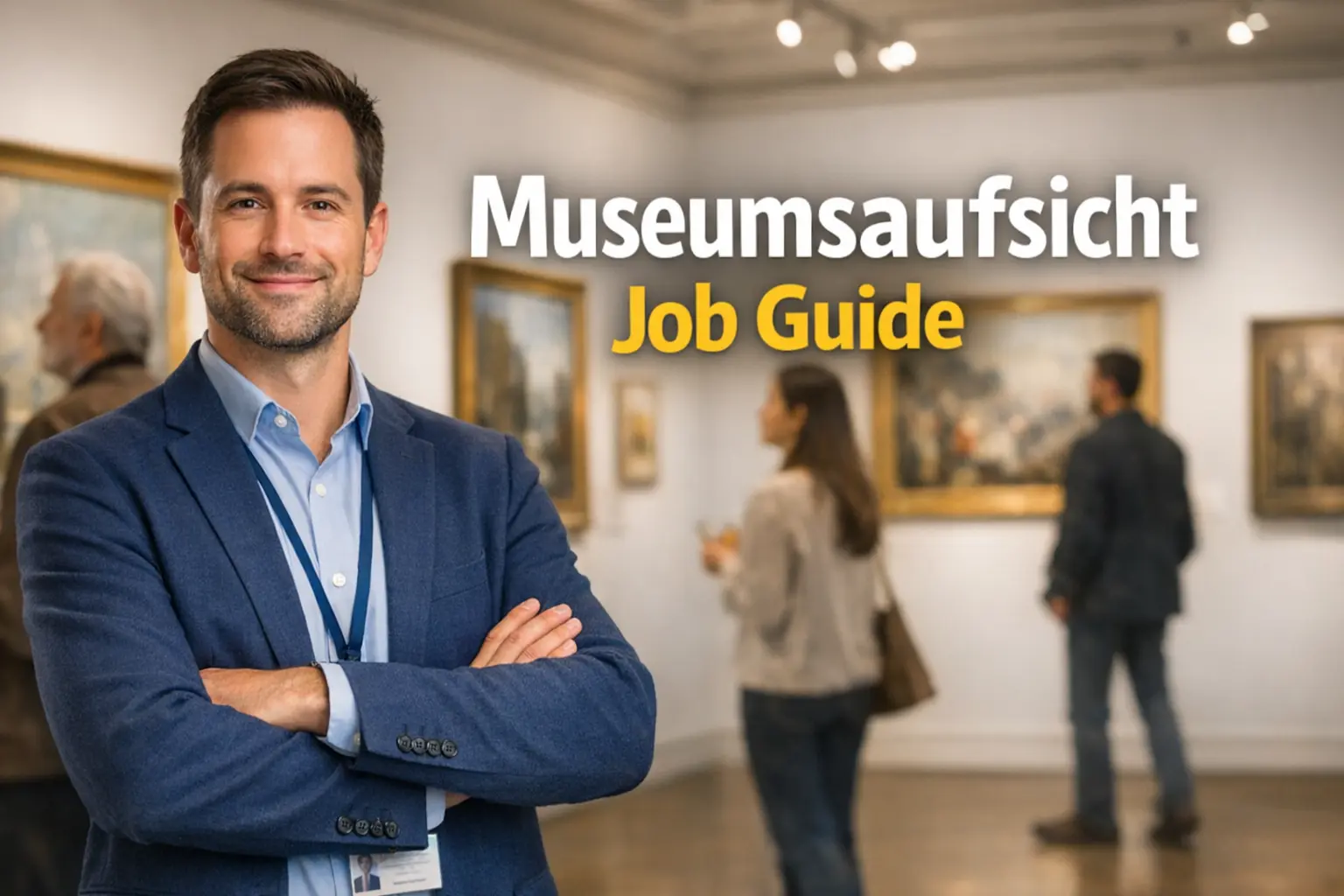
The moment you enter the museum space the entire environment becomes peaceful and organized and secure. The artwork receives optimal illumination. Visitors speak in low voices. People maintain safe distance from restricted areas. Ever wondered who makes all that happen?
The job of museumsaufsicht requires a person to perform tasks that most people mistakenly think are uninteresting. The following information provides complete details about the daily activities of this job which you should understand if you want to work in cultural institutions.
What Is a Museumsaufsicht Job?
The term originates from German since “Museum” translates to museum and “Aufsicht” refers to supervision or oversight. English speakers commonly use the terms museum attendant gallery supervisor and visitor services officer to describe this position.
The museumsaufsicht job requires more responsibilities than its existing titles convey. Museum supervisors function as security personnel who guide visitors through the museum while handling emergency situations and assisting tourists who need directions.
They work across all types of cultural institutions — art galleries, natural history museums, science centers, and historical sites. Their workday varies based on their location which requires them to either monitor a quiet gallery displaying 16th-century art or oversee an active interactive display that hosts multiple school groups.
What Does the Role Actually Involve?
Most job descriptions for a museumsaufsicht position include a similar core set of responsibilities, though each institution adds its own flavor.
Gallery monitoring is the foundation. Supervisors watch exhibition spaces to make sure visitors respect the rules — no flash photography, no touching, appropriate distancing from fragile works. This requires more tact than it sounds. You’re enforcing rules to strangers who paid to be there, often in multiple languages.
Visitor assistance is equally central. Supervisors answer questions, give directions, and help guests with accessibility needs. A well-informed attendant can genuinely enhance someone’s experience of an exhibition.
Exhibit protection goes beyond watching. Supervisors are trained to spot environmental risks — humidity changes, lighting issues, suspicious behavior — and escalate quickly when something’s wrong. In larger museums, they coordinate with security teams and curators.
Emergency response is part of the job too. Supervisors are typically first responders within gallery spaces during fire alarms, medical incidents, or security situations. Most institutions require basic first aid training as part of onboarding.
Skills That Actually Get You Hired
Museums receive a lot of applications from people who love art or history. What separates the candidates who land museumsaufsicht jobs from those who don’t comes down to a specific set of practical skills.
Communication tops the list. You’ll work with visitors from dozens of countries, age groups ranging from five to eighty-five, and colleagues across departments. Clear, calm communication — even in tense situations — is non-negotiable.
Observation and attention to detail matter enormously. You’re monitoring large spaces and need to notice small things quickly: a visitor who’s gotten too close to a sculpture, a group moving in a direction they shouldn’t, a child about to touch a glass case.
Physical stamina is often underestimated by first-time applicants. Many museumsaufsicht positions involve standing or walking for six to eight hours per shift. This is a real physical requirement, not a formality.
Multilingual ability is a significant advantage, especially in museums in major cities or tourist destinations. Fluency in English plus one or two other languages makes a candidate considerably more competitive.
Technology comfort is becoming increasingly important. Modern museums incorporate digital installations, interactive exhibits, and surveillance systems. Supervisors who can work comfortably with basic tech are preferred.
Qualifications and How to Get Started
The good news: a museumsaufsicht job typically doesn’t require a university degree. Most institutions ask for a high school diploma as the minimum, though candidates with backgrounds in art history, cultural studies, hospitality, or education have a real advantage.
Here’s what a realistic path looks like:
Start by applying for entry-level visitor services or front-of-house roles at your local museum or gallery. Many institutions prefer to train from within, and these roles give you direct exposure to how the institution operates.
Complete any required certifications — first aid and CPR training is standard, and some institutions require security certification depending on your country.
Build knowledge of the institution’s collections. Supervisors who can speak intelligently about what’s on display are more valuable and more likely to be promoted.
Network within the cultural sector. Museum professionals tend to move between institutions and know each other. Attend industry events, volunteer at exhibitions, and connect with staff at museums you’d like to work for.
Common Challenges (And How to Handle Them)
Anyone who’s worked a museumsaufsicht job will tell you it’s not without its friction. A few challenges come up repeatedly.
Difficult visitors are part of the territory. Some people push back when corrected, especially in stressful or crowded exhibition environments. The best supervisors have a calm, firm communication style that de-escalates without creating a scene.
Long hours on your feet are a genuine physical strain. Investing in quality footwear isn’t a joke — it’s a professional necessity. Many experienced supervisors also learn to rotate positions within a gallery to stay alert.
Monotony in quieter periods can affect performance. The best attendants stay mentally engaged by learning more about the collections they supervise, which also makes them more useful to visitors.
Irregular schedules are common. Museums operate on weekends, holidays, and extended evening hours. New hires often take the shifts others don’t want. Flexibility here significantly improves your chances of being hired and promoted.
Career Growth and Where This Role Can Lead
A museumsaufsicht job is a genuine entry point into the broader cultural sector. Many professionals who start in gallery supervision move into roles with significantly more responsibility.
Common progressions include senior supervisor or team leader positions, visitor experience management, collections coordination, and education program coordination. Some move into curatorial support roles after gaining deeper subject knowledge.
The cultural sector values loyalty and institutional knowledge. Professionals who build real expertise in a museum’s collections and operations tend to advance steadily, even without formal academic credentials.
Outside of museums, the skills built in this role transfer well to hospitality management, event operations, corporate visitor services, and roles in heritage tourism.
FAQ
What does a museumsaufsicht job pay?
Salaries vary by country and institution. In German-speaking countries, entry-level positions typically start between €1,800 and €2,200 per month. In the United States, museum attendant roles average around $30,000–$40,000 annually, with larger institutions paying more. Part-time and hourly roles are also common.
Do I need to speak German to get a museumsaufsicht job?
Not necessarily. While the term itself is German, museumsaufsicht-style positions exist globally. German fluency is important if you’re applying in Germany, Austria, or Switzerland. For positions elsewhere, the language requirements depend on the institution and its visitor demographics.
Is this job suitable for someone with no museum experience?
Yes. Most entry-level positions require no prior museum experience. Relevant experience in hospitality, customer service, retail, or security is often considered equivalent. A genuine interest in art, history, or culture helps during interviews.
What are the working hours like?
Museums typically operate seven days a week, including public holidays and extended evening hours for special exhibitions. Shift work is standard. New staff often take weekends and holidays initially. Hours stabilize as you gain seniority.
Can a museumsaufsicht job lead to curator roles?
Directly, it’s unlikely without additional education. But it can open doors. Many curators began their careers in visitor-facing roles and built their knowledge from the ground up. If curatorial work is your goal, combine supervisory experience with part-time study in art history or a related field.
How physically demanding is the role?
It’s more physical than most office jobs. Long periods of standing and walking are standard. Candidates with mobility restrictions should ask about specific accommodation options when applying, as some institutions offer seated supervisory positions.
What’s the best way to find museumsaufsicht job openings?
Search on institution websites directly, as many museums post openings there before listing them elsewhere. General job boards like Indeed, LinkedIn, and government job portals also list cultural sector roles. In German-speaking regions, platforms like Jobscout24 and Stepstone carry regular listings.
Conclusion
A museumsaufsicht job is one of those roles that quietly holds everything together. It’s not glamorous in the traditional sense, but it puts you at the center of cultural life — surrounded by art, history, and people from around the world.
A few things worth remembering as you pursue this path:
- Strong communication and physical stamina matter more than credentials
- Entry-level positions exist across institutions of all sizes
- The role builds skills that transfer well across the cultural and hospitality sectors
- Career growth is real for those who invest in institutional knowledge
If you find meaning in protecting and sharing culture, this career deserves serious consideration. Start by reaching out to your local museum — many institutions are actively looking for dependable, personable, and culturally curious people to join their teams.
