
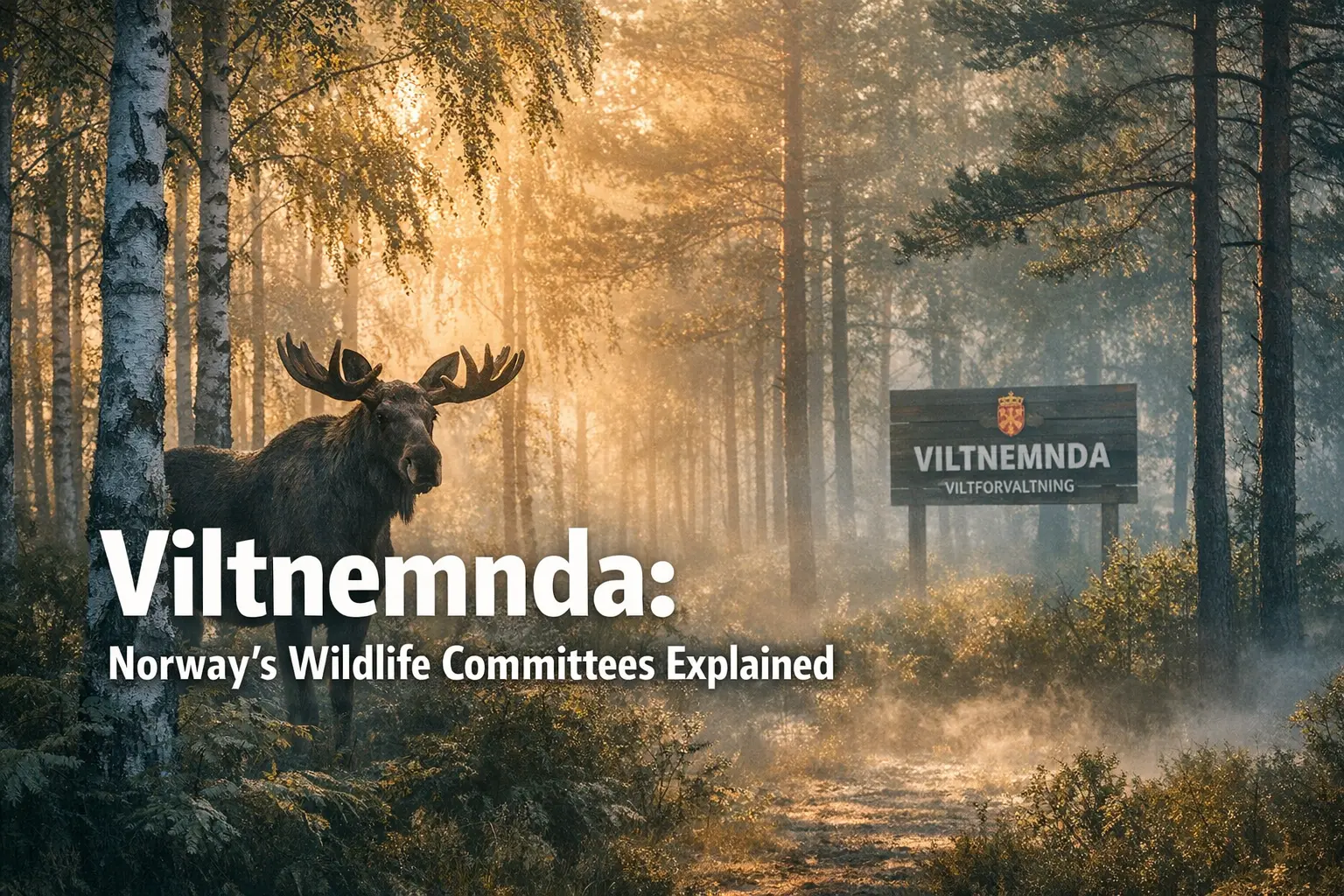
You probably haven’t heard of viltnemnda unless you’ve spent time around Norwegian wildlife policy or rural land management. The small local institution manages the wildlife of Norway which includes millions of animals throughout the entire country. The committees make decisions which affect all aspects of their work from moose populations to hunting quotas and from forest ecosystems to road safety.
The organization viltnemnda represents a major part of the solution to your question about how countries maintain wildlife balance while preventing natural systems from descending into disorder.
What Viltnemnda Actually Is
Viltnemnda is a municipal wildlife committee in Norway that handles local decisions about wild animals and hunting. Each municipality appoints its own committee, typically through the local municipal council. The word itself comes from Norwegian, where “vilt” means wild game and “nemnd” refers to a committee or board.
The committee doesn’t just rubber-stamp national rules from above. It combines on-the-ground local knowledge with national environmental regulations to reach decisions that are both practical and legally sound. Think of it as the middle layer between broad government policy and actual boots-on-the-ground wildlife management.
Why These Committees Were Created
Norway’s relationship with nature goes back centuries. Hunting, fishing, and living close to the land have always been part of the culture. But as the country developed and human activity expanded into wild spaces, unregulated hunting began to create serious problems.
Populations of moose, deer, and other game animals fluctuated wildly without any structured oversight. Habitat damage increased, species came under pressure, and conflicts between wildlife and farming communities grew more frequent. The Norwegian government responded by introducing local wildlife committees to bring order and long-term thinking into the picture.
Over time, viltnemnda became a formal part of the country’s environmental governance structure, operating within a clear legal framework that defines both its authority and its limits.
How Viltnemnda Is Structured
The committee is typically made up of people appointed by the municipal council, often including individuals with experience in farming, forestry, hunting, and nature conservation. There’s no single national template for how large or how small a viltnemnda should be. It varies depending on the size of the municipality and the complexity of local wildlife issues.
Members serve for set terms and work alongside landowners, environmental agencies, and local authorities throughout that period. The goal is always to bring a balanced mix of perspectives to the table, so that decisions account for both ecological needs and the practical realities of rural life.
The Core Duties of a Viltnemnda
Monitoring Wildlife Populations
One of the most critical jobs viltnemnda carries out is tracking how many animals are present in the local area and whether those numbers are growing, shrinking, or staying stable. Species like moose and roe deer are monitored closely, because even modest population swings can have large downstream effects on forests, farmland, and roads.
When numbers rise too high, habitats get stripped of vegetation, crop losses mount up, and vehicle collisions increase. When numbers fall too low, entire ecosystems can shift in ways that take years to reverse. Getting that balance right requires consistent monitoring and clear-eyed assessment, and viltnemnda is responsible for making sure that data gets collected and acted upon.
Setting Hunting Quotas and Seasons
Viltnemnda plays an advisory role in recommending how many animals may be legally hunted during a given season. These recommendations aren’t guesses. They’re based on population data, habitat capacity, and guidelines set by national authorities.
Hunters in Norway take these quotas seriously. The system depends on accurate reporting, and viltnemnda helps make sure that the number of animals harvested each year doesn’t outpace what the local population can sustain. It’s one of the clearest examples of local governance making national conservation policy actually work on the ground.
Handling Human-Wildlife Conflict
Farmers whose crops get destroyed by deer, livestock owners dealing with predator activity, and drivers navigating roads where moose regularly cross — all of these situations fall within the scope of viltnemnda’s work. The committee helps coordinate responses, recommends preventive measures, and advises on whether compensation is appropriate in cases of significant loss.
This conflict management role is often overlooked, but it’s one of the most practically important things viltnemnda does. Rural communities live and work alongside wild animals every day, and having a clear local institution to turn to makes a real difference.
Advising Local Government on Land and Planning
When municipalities plan new roads, housing developments, or infrastructure projects, the environmental impact on wildlife is not always the first thing on the agenda. Viltnemnda steps in to provide that perspective. The committee advises local government on how proposed developments might affect migration routes, breeding grounds, or species that are already under pressure.
This advisory function helps integrate wildlife considerations into decisions that might otherwise ignore them entirely.
Challenges Viltnemnda Faces Today
No institution works perfectly, and viltnemnda is no exception. One consistent challenge is balancing competing interests. Hunters want access. Farmers want protection. Conservationists want restraint. Getting all of those groups to accept the same set of decisions takes real effort and careful communication.
Climate change adds another layer of difficulty. Species are shifting their ranges, seasonal patterns are changing, and behaviors that used to be predictable have become harder to anticipate. Viltnemnda has to adapt its management strategies in response to conditions that are genuinely new and not fully understood yet.
Resource limitations are a third pressure point. Smaller municipalities sometimes lack the funding or staffing to conduct thorough wildlife surveys, which means decisions occasionally have to be made with incomplete information.
What Sets Viltnemnda Apart From Top-Down Management
The thing that makes viltnemnda genuinely effective is how closely it stays connected to local realities. National policies are set by people who may never have walked through a Norwegian forest in November or watched a herd of moose move through agricultural land at dusk. Local committee members often have that lived experience.
That local knowledge fills in gaps that scientific data alone can’t address. It makes recommendations more realistic and increases the likelihood that hunters, landowners, and communities will actually follow through on what the committee decides.
FAQ
What does viltnemnda mean in English?
Viltnemnda translates roughly to “wildlife committee” in English. In Norwegian, “vilt” refers to wild game animals and “nemnd” means a board or committee. The name reflects the institution’s core purpose, which is to oversee the management of wild animals at the local municipal level in Norway.
Who appoints the members of a viltnemnda?
Members are appointed by the local municipal council. Selection typically favors people with relevant backgrounds in hunting, farming, forestry, or nature conservation. The number of members and the exact composition can vary from one municipality to another depending on local needs and resources.
Does every Norwegian municipality have a viltnemnda?
Most Norwegian municipalities have some form of wildlife committee or a related administrative body. The structure and name can vary slightly across regions, but the core function of managing local wildlife and advising on hunting matters is consistent throughout the country’s municipal system.
How does viltnemnda decide on hunting quotas?
The committee uses population data collected through local monitoring, combined with national guidelines from environmental authorities. Viltnemnda then makes a recommendation for how many animals of each relevant species may be hunted during the coming season. These recommendations are meant to keep harvests within what local populations can sustainably support.
Can viltnemnda stop a development project?
Viltnemnda doesn’t have direct veto power over municipal planning decisions. However, its advisory role means that its recommendations carry weight when local governments are evaluating the environmental impact of new projects. If the committee identifies serious risks to wildlife, those concerns become part of the formal planning record.
Is viltnemnda relevant outside of Norway?
The term and specific institution are uniquely Norwegian. However, the concept behind viltnemnda — local committees that manage wildlife through a mix of national regulation and community knowledge — is something that wildlife managers and policy researchers in other countries study and draw lessons from.
How does viltnemnda support sustainable hunting culture?
The committee promotes ethical hunting by ensuring quotas reflect actual population health, encouraging accurate harvest reporting, and supporting education programs for hunters. Its oversight helps preserve the hunting tradition in Norway while making sure that future generations have healthy wildlife populations to engage with.
Conclusion
The organization Viltnemnda serves more than 1000 people. The organization Viltnemnda serves as a vital link between local communities and wildlife management practices which directly impact their way of life. The organization monitors animal populations and establishes hunting schedules while solving human-wildlife conflicts and promoting environmental sustainability through its work with local government decisions.
The demand for local authorities to manage wildlife through informed decision-making will rise as climate change intensifies and ecosystems encounter fresh challenges. The community organization Viltnemnda shows that local organizations can achieve significant results when their systems receive proper design and their personnel obtain decision-making powers.
